
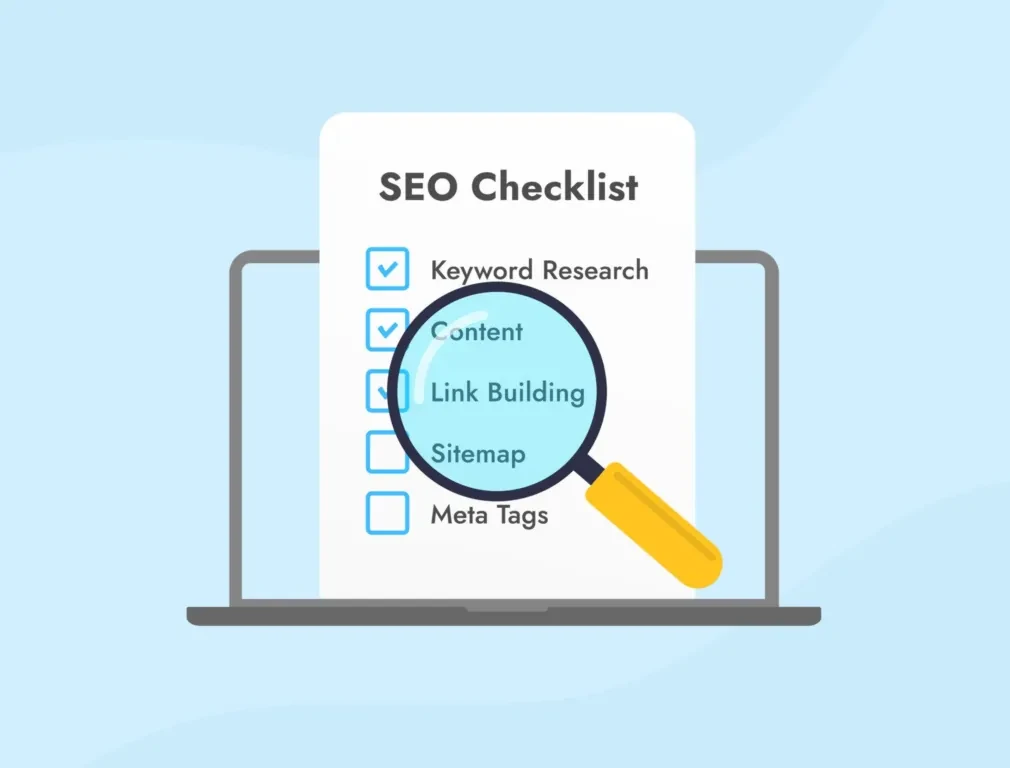
Getting your website to appear higher on Google can make a big difference to your business. When people search for products, services, or information related to your industry, you want your website to be among the results they find.
However, improving your Google rankings takes more than adding keywords to a few pages. Your website needs useful content, a clear structure, a good user experience, and a strong SEO strategy that improves over time.
Whether you run a small business website, an online store, or a company website, the right SEO steps can help you attract more visitors without depending entirely on paid advertising.
In this guide, we will explain how to improve your website's Google rankings step by step, using practical methods that you can start applying today.
1. Understand What Your Audience Is Searching For
Before making changes to your website, understand what your potential customers are searching for on Google.
This is called keyword research. It helps you discover the words and phrases people use when looking for information, products, or services.
For example, if you provide web design services, people might search for:
- Affordable website design services
- Best website design company for small businesses
- How much does a business website cost?
- Professional website design for startups
These searches have different purposes. Some people want to hire a service provider, while others are still researching their options.
Your goal should be to find search terms that match your services and the needs of your target audience.
How to find useful keywords:
- Start by writing down the main services or products your business offers.
- Search for those services on Google.
- Look at the suggestions that appear while typing.
- Check the related searches at the bottom of the results page.
- Explore questions people ask about your industry.
- Use keyword research tools to check search demand and competition.
Try to focus on specific search phrases instead of targeting only broad keywords. For example, "SEO services for small businesses" may be more relevant to a small business SEO provider than simply targeting "SEO."
Also, remember that a keyword with high search volume is not always the best choice. A smaller, more specific search term can attract visitors who are more likely to become customers.

2. Create Helpful and Relevant Website Content
Content plays an important role in SEO because it helps Google understand what your pages are about and gives visitors a reason to stay on your website.
If your website only contains short service descriptions with little useful information, it may struggle to compete with websites that provide more complete answers.
You do not need to write extremely long articles. You need to create content that answers the questions your audience actually has.
For example, a company offering SEO services could publish articles about:
- How to improve website rankings on Google
- Common SEO mistakes that affect website traffic
- How keyword research helps businesses attract customers
- On-page SEO tips for business websites
- How to build website authority naturally
Each article should focus on one main topic and cover the important questions related to it.
Tips for creating better content:
- Write for people rather than search engines.
- Use simple language that your audience understands.
- Divide information into clear sections.
- Include practical examples where possible.
- Avoid repeating the same keyword unnecessarily.
- Update older articles when information changes.
- Make sure the content provides something useful beyond general advice.
Publishing regularly can help you build a useful resource for your audience. However, quality should always come before publishing a large number of articles.
If you need professional help creating search-friendly content, explore our SEO content writing services.
3. Optimize Your Website Pages (On-Page SEO)
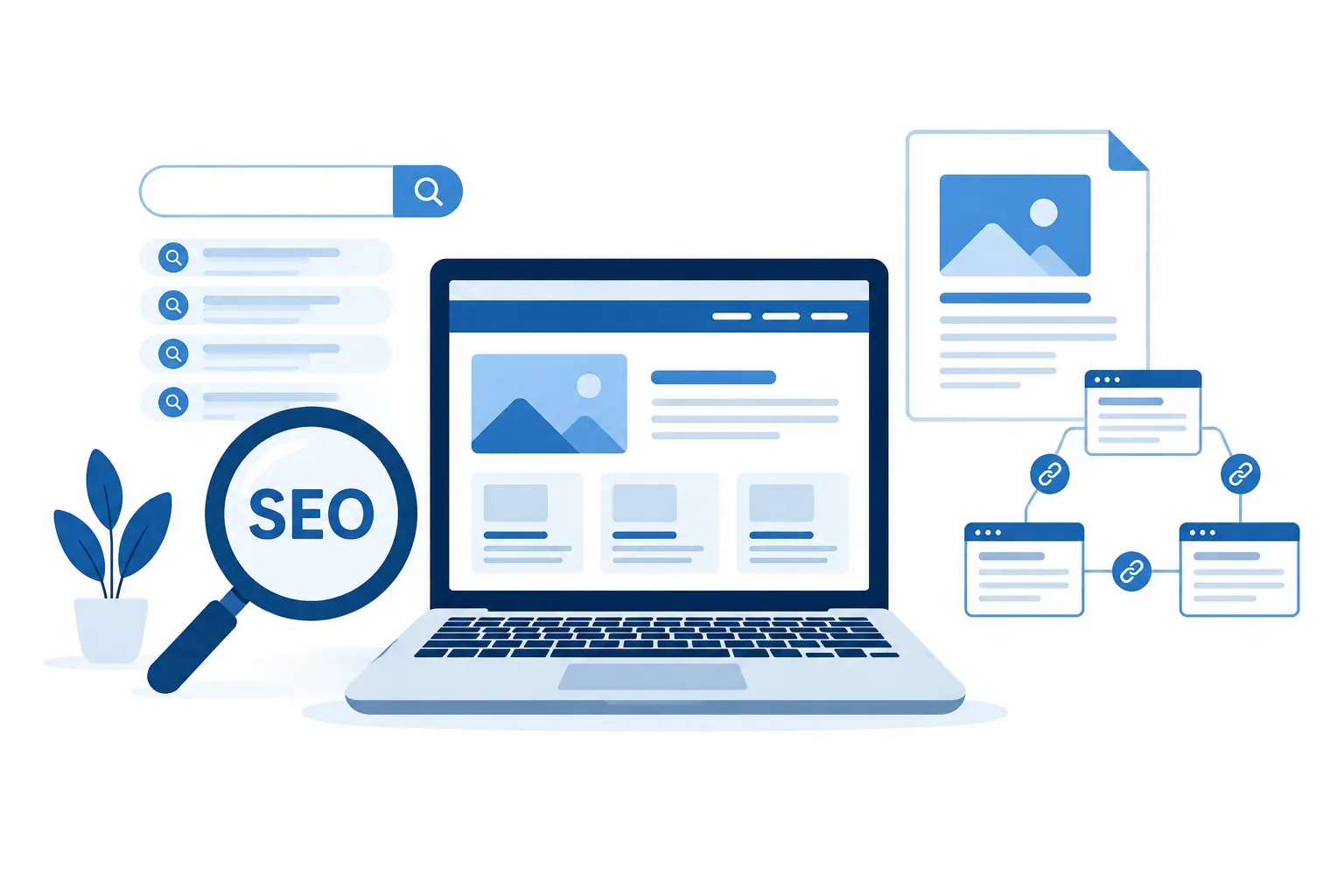
Writing useful content is only one part of SEO. You also need to organize and optimize each page so visitors and search engines can understand it easily.
This process is known as on-page SEO.
Start with your most important pages, especially your homepage, service pages, and articles.
Here are the main elements to optimize:
Page title: Write a clear title that explains what the page offers. Include your main search phrase naturally and make each page title unique.
Meta description: Add a short description that explains what visitors will find on the page. It should encourage people to click without making promises the page cannot deliver.
Headings: Use one clear main heading and organize the remaining content with relevant H2 and H3 headings.
URL structure: Keep URLs short, readable, and related to the page topic. For example, /services/technical-seo is easier to understand than a URL containing random numbers.
Images: Use relevant, high-quality images. Compress them to reduce file size and add descriptive alt text so their purpose is clear.
Content organization: Keep paragraphs short, use bullet points when helpful, and make important information easy to find.
You should also avoid using the same title, description, and content across multiple pages. Every important page should have a clear purpose.
Learn more about improving your page structure through our on-page SEO services.
4. Improve Your Website's Loading Speed and Technical SEO
A website can have excellent content and still face SEO problems if search engines cannot access its pages properly or visitors struggle to use it.
This is where technical SEO becomes important.
Technical SEO focuses on the behind-the-scenes parts of your website that help search engines crawl, understand, and index your pages.
Start by checking these important areas:
Website loading speed: Make sure your pages load quickly. Large images, unnecessary scripts, and poorly optimized hosting can slow down your website.
Mobile-friendly design: Your website should work properly on mobile phones, tablets, and desktop computers. Visitors should not need to zoom in or scroll sideways to read your content.
HTTPS security: Use a secure HTTPS connection to protect information exchanged between your website and visitors.
XML sitemap: Create an XML sitemap that lists the important pages you want search engines to discover.
Robots.txt: Check that your robots.txt file is not accidentally blocking important pages from being crawled.
Broken links: Find and fix broken internal links that lead to missing pages.
Indexing issues: Make sure important pages can be indexed and are not accidentally marked with a noindex instruction.
You should also pay attention to Google's Core Web Vitals, which measure important parts of the user experience, including loading performance, responsiveness, and visual stability.
Fixing technical problems will not automatically put your website at the top of Google. However, it can remove barriers that prevent your content from performing well.
For a detailed review of these issues, consider a professional technical SEO service.
5. Build a Strong Internal Linking Structure
Internal links connect one page of your website to another page on the same website.
They help visitors discover related information and make it easier for search engines to understand how your content is connected.
For example, if you publish an article about improving website rankings, you can link to related pages about:
- On-page SEO
- Technical SEO
- SEO audits
- Content writing
- Off-page SEO
These links should appear naturally where they provide additional information.
How to improve internal linking:
- Identify your most important service pages.
- Find articles and pages that discuss related topics.
- Add links where readers may need more information.
- Use descriptive anchor text instead of generic phrases such as "click here."
- Check that your links lead to the correct pages.
For example, instead of writing "Learn more here," write "Explore our technical SEO services."
Avoid adding too many links just to increase their number. Every internal link should have a clear purpose.
A good internal linking structure can also help visitors move from educational articles to relevant service pages when they are ready to take action.
6. Earn Quality Backlinks From Relevant Websites
Backlinks are links from other websites that point to your website.
They can help search engines understand how your website is connected to other sources across the internet. Links from relevant, trusted websites can also bring referral traffic and introduce your business to new audiences.
However, not every backlink is valuable. A large number of unrelated or low-quality links does not guarantee better rankings.
Focus on building genuine relationships and earning links from websites that are relevant to your industry.
Some practical ways to earn backlinks include:
- Publish original research, guides, and useful resources.
- Write guest articles for relevant industry websites.
- Contribute expert comments and insights to publications.
- Build relationships with bloggers and website owners.
- Create content that other websites naturally want to reference.
- Look for relevant business directories and industry resources.
Guest posting can also help you reach a wider audience when you publish useful content on websites that share your target audience.
The important thing is to focus on relevance, editorial quality, and real value rather than collecting links simply for their numbers.
You can explore our off-page SEO services to learn more about building website authority.
7. Optimize Your Website for Local Searches
If your business serves customers in a particular city or region, local SEO can help people find your services when searching nearby.
For example, someone searching for "SEO agency in London" is likely looking for a service provider in that location.
Local SEO helps businesses improve their visibility in location-based searches and Google Maps.
Here are some important local SEO steps:
- Create and verify your Google Business Profile if your business is eligible.
- Add accurate business information, including your name, address, and contact details.
- Choose the most relevant business categories.
- Add real photos of your business, team, or services.
- Encourage genuine customer reviews.
- Create useful location-specific website content where relevant.
- Keep your contact details consistent across trusted business listings.
Do not create multiple pages for different locations if you do not actually serve those areas. Each location page should provide useful, accurate information.
Local SEO is particularly useful for service providers, local shops, agencies, and businesses that depend on customers from specific areas.
8. Track Your SEO Performance and Make Improvements
SEO is not a one-time task. You need to monitor your website's performance to understand what is working and where improvements are needed.
Instead of making random changes, use real data to guide your decisions.
Two useful tools are Google Search Console and Google Analytics.
Google Search Console helps you understand how your website appears in Google Search. You can use it to check search queries, impressions, clicks, average positions, and indexing issues.
Google Analytics helps you understand what visitors do after arriving on your website, including the pages they visit and the actions they take.
Important SEO metrics to monitor include:
- Organic clicks: How many visitors reach your website from unpaid search results.
- Impressions: How often your pages appear in search results.
- Average position: Your website's average ranking position for search queries.
- Click-through rate: The percentage of impressions that result in clicks.
- Organic conversions: Visitors who complete useful actions, such as submitting a form or contacting your business.
- Indexed pages: The pages Google has added to its search index.
Review your results regularly. If a page receives impressions but very few clicks, consider improving its title and description. If a page receives traffic but no enquiries, review its content, relevance, and calls to action.
You can also identify pages that are close to performing better and improve their content instead of always publishing new articles.
For a deeper review of your website's SEO health, explore our SEO audit services.
9. Avoid Common SEO Mistakes
While working on your SEO, avoid shortcuts that can damage your website or waste your time.
Some common mistakes include:
Keyword stuffing: Repeating the same keyword too many times makes content difficult to read and does not create a better experience.
Copying content: Publishing copied or lightly rewritten articles provides little value to readers. Create original content based on your knowledge and research.
Buying spammy backlinks: Avoid services that promise thousands of backlinks for a very low price. These links can create risks without delivering meaningful results.
Ignoring mobile users: A website that works poorly on mobile devices can frustrate visitors and affect their experience.
Publishing without a plan: Random articles on unrelated topics make it harder to build a clear and useful content structure.
Expecting instant results: SEO takes time. Rankings can change as Google discovers pages, evaluates content, and updates search results.
A better approach is to follow a consistent strategy, review your progress, and make improvements based on actual performance.
10. Create a Simple SEO Action Plan
If you are new to SEO, trying to improve everything at once can feel overwhelming. The best approach is to work through a clear plan.
Here is a practical 30-day starting plan:
Week 1: Research and website review
- Identify your main services and target audience.
- Research relevant search terms.
- Review your existing website pages.
- Check for indexing and technical issues.
Week 2: Improve important pages
- Rewrite unclear page titles and descriptions.
- Improve headings and page content.
- Optimize images and URLs.
- Add relevant internal links.
Week 3: Publish useful content
- Publish one or two detailed articles.
- Answer common questions from your audience.
- Link articles to related service pages.
- Check that the content works well on mobile devices.
Week 4: Review and improve
- Check Google Search Console data.
- Review impressions, clicks, and search positions.
- Identify pages that need improvement.
- Plan your next content and link-building activities.
This is a starting plan, not a promise of higher rankings within 30 days. The results depend on your website, competition, industry, and the work required to address existing problems.
Final Thoughts
Improving your website's Google rankings requires a combination of useful content, proper keyword research, on-page optimization, technical improvements, internal linking, and quality backlinks.
There is no single trick that guarantees first-page rankings. What matters is understanding your audience, creating pages that answer their questions, and continuously improving your website based on real performance data.
Start with the most important pages, fix any major technical issues, and build a consistent content strategy around the services and topics your audience cares about.
If you want to improve your website's search visibility but are unsure where to begin, Epta Sky can help you identify SEO opportunities and build a practical growth strategy. Explore our SEO services or contact our team to discuss your website's goals.
A well-planned SEO strategy can help your business build long-term visibility, attract relevant visitors, and create more opportunities for growth.