What Is Off-Page SEO? A Complete Guide to Building Trust, Authority, and Long-Term Rankings
Jan 15, 2026
Table of Contents
In today’s competitive digital environment, ranking on Google is no longer just about writing good content or optimizing your website internally. Search engines now focus heavily on trust, authority, and reputation, and that is exactly where off-page SEO plays a crucial role.
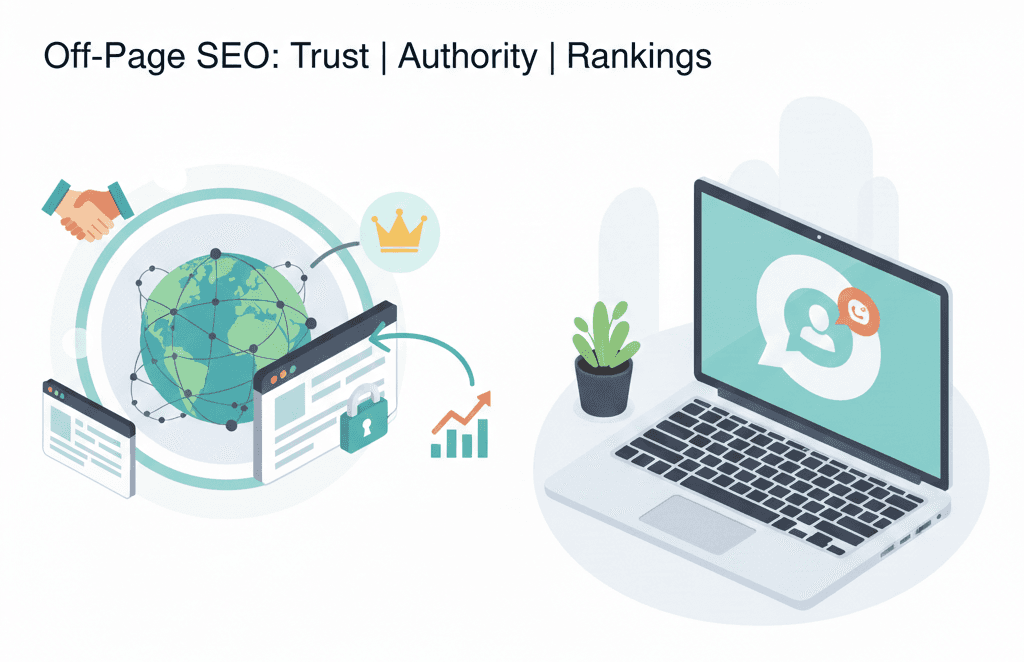
Off-page SEO refers to all the actions taken outside your website that help improve your site’s credibility, visibility, and authority in search engines. While on-page SEO tells Google what your site is about, off-page SEO tells Google how trustworthy and valuable your site is according to the rest of the internet.
In this in-depth guide, you will learn:
What off-page SEO really is
Why it matters more than ever
The most important off-page SEO factors
Proven techniques that still work today
Common mistakes to avoid
How off-page SEO supports Google’s E-E-A-T guidelines
Tools and metrics to measure success
Understanding Off-Page SEO in Simple Terms
Off-page SEO includes everything that happens beyond your website but still influences how search engines rank your pages. This mainly involves:
Backlinks from other websites
Brand mentions (linked or unlinked)
Reviews and reputation signals
Social media engagement
PR and media coverage
Think of it this way:
If your website were a person, off-page SEO would be its reputation.
When trustworthy websites talk about you, link to you, or mention your brand, Google sees that as a strong signal that your website provides real value.
Off-Page SEO vs On-Page SEO
Written by
Hasnain Abbas
Founder of Epta Sky | Helping businesses grow with smart SEO & digital strategies | Passionate about turning websites into revenue machines
To understand off-page SEO better, it helps to compare it with on-page SEO.
On-Page SEO includes:
Content quality
Keyword optimization
Page speed
Internal linking
Technical SEO
Off-Page SEO includes:
Backlinks
Brand authority
Social proof
External references
Trust signals
Simple analogy:
🏠 On-page SEO is your house
🗣️ Off-page SEO is how many people recommend your house
For sustainable rankings, you need both.
Why Off-Page SEO Is So Important for Google Rankings
Google’s main goal is to show users the most reliable and helpful results. Off-page SEO helps Google answer one key question:
“Can this website be trusted?”
When authoritative websites link to your content or mention your brand, Google treats those signals as votes of confidence. The more relevant and trustworthy those votes are, the higher your chances of ranking.
With recent algorithm updates, Google now places even more importance on:
Trustworthiness
Brand authority
Real-world reputation
This aligns directly with Google’s E-E-A-T framework.
How Off-Page SEO Supports E-E-A-T (Experience, Expertise, Authority, Trust)
Off-page SEO plays a major role in strengthening E-E-A-T signals:
Experience: Real users talking about your brand
Expertise: Mentions from niche-relevant websites
Authority: High-quality backlinks from trusted domains
Trust: Reviews, testimonials, and consistent brand presence
When your site earns genuine recognition from credible sources, Google is more confident in ranking it higher.
Core Off-Page SEO Factors You Must Focus On
1. High-Quality Backlinks
Backlinks remain one of the strongest ranking factors, but quality matters more than quantity.
Good backlinks come from:
Relevant niches
High-authority websites
Editorially placed content
Bad backlinks (spammy or paid links) can actually harm your rankings.
2. Brand Mentions (Linked & Unlinked)
Even when your brand is mentioned without a link, it still helps build trust and awareness. Google can associate these mentions with your brand authority.
3. Social Signals
Likes, shares, comments, and discussions do not directly boost rankings, but they:
Increase content visibility
Drive referral traffic
Help content earn natural backlinks
4. Online Reputation & Reviews
Customer reviews, testimonials, and ratings signal trust — especially for local businesses and service websites.
5. Content Promotion & Distribution
Publishing content is not enough. Promotion ensures your content reaches the right audience and earns recognition.
PR is one of the most powerful modern SEO strategies. Mentions in:
News websites
Industry publications
Interviews and podcasts
These signals build massive authority even if links are nofollow.
4. Community Engagement & Forums
Participate in:
Reddit
Quora
Niche-specific forums
Facebook or LinkedIn groups
Answer questions genuinely and link only when relevant.
5. Influencer & Affiliate Collaborations
Partner with influencers who:
Match your niche
Have real audiences
Promote honestly
Transparency is key to maintaining trust.
6. Business Listings & Directories
Avoid spammy directories. Instead, focus on:
Google Business Profile
Industry-specific directories
Local citations
These help with local SEO and credibility.
7. Content Repurposing
Turn your blog posts into:
YouTube videos
LinkedIn articles
Podcasts
Infographics
Each platform expands reach and authority.
Common Off-Page SEO Mistakes to Avoid
Many websites fail because of these mistakes:
Buying cheap backlinks
Over-focusing on link quantity
Ignoring brand reputation
Fake reviews or misleading promotions
No author credibility or transparency
Google rewards authenticity, not shortcuts.
How to Measure Off-Page SEO Performance
Track these metrics regularly:
Backlink quality & referring domains
Brand mentions
Referral traffic
Social engagement
Domain authority
Organic keyword growth
Useful tools:
Ahrefs
SEMrush
Moz
Google Search Console
Brand monitoring tools
Off-Page SEO Results: How Long Does It Take?
Off-page SEO is a long-term strategy. In most cases:
Initial impact: 2–3 months
Strong results: 3–6 months
Authority growth: 6+ months
Consistency matters more than speed.
FAQs About Off-Page SEO
Is off-page SEO still relevant in 2025? Yes, it is more important than ever due to trust-based algorithms.
Can small websites compete with big brands? Yes, by focusing on niche relevance and quality signals.
Do nofollow links matter? Yes, they still help with visibility and brand trust.
Final Thoughts: Focus on Trust, Not Just Links
Off-page SEO is not about manipulating rankings. It is about earning trust.
When your brand is consistently mentioned, recommended, and respected across the web, Google naturally rewards you with better visibility and higher rankings.